This guide clarifies the full landscape of alternatives available to lymphoma patients. We distinguish between medical alternatives to chemotherapy (immunotherapy, targeted therapy, CAR-T cell therapy, and radiation) — which are clinical, doctor-supervised options — and complementary/integrative approaches (nutritional strategies, plant-derived compounds, mind-body therapies) that can reduce side effects, improve quality of life, and potentially target cancer cell vulnerabilities alongside or instead of conventional treatment.
Key Takeaways
- FDA-approved options like immunotherapy, CAR-T cell therapy, and targeted therapy show 66–91% response rates in relapsed lymphoma
- Mind-body therapies (meditation, yoga, acupuncture) reduce anxiety, fatigue, and nausea with ASCO/SIO endorsement
- Plant compounds like quercetin, curcumin, and resveratrol show anti-lymphoma properties in preclinical research
- Nutritional strategies targeting methionine restriction exploit cancer cell metabolic vulnerabilities
- The NORI Protocol uses cycled methionine restriction combined with proprietary nutraceuticals, available to patients worldwide
Understanding Lymphoma: Why Patients Seek Alternatives
Lymphoma is a blood cancer originating in lymphocytes — the white blood cells that form part of the immune system. It affects the lymphatic system and is classified primarily as Hodgkin lymphoma or non-Hodgkin lymphoma. In 2022, non-Hodgkin lymphoma accounted for 553,389 new cases globally, while Hodgkin lymphoma saw 82,469 cases — numbers that reflect just how broadly this disease reaches.
Why patients look beyond standard chemotherapy:
- Lymphoma can develop resistance over multiple relapses, forcing increasingly aggressive regimens
- Fatigue, nausea, immune suppression, hair loss, and fertility damage reduce quality of life during treatment
- Even patients who achieve remission face long-term risks: secondary cancers, heart damage, and chronic fatigue
- Many patients specifically seek therapies that target cancer cells without harming surrounding healthy tissue
Understanding these motivations is the starting point — but the type of approach matters just as much as the reason for seeking one.
The Difference Between "Alternative" and "Complementary"
These terms are not interchangeable. Complementary therapies (acupuncture, meditation, nutritional support) are used alongside conventional care to reduce side effects and support overall health. Alternative treatments replace conventional oncology entirely. Any treatment decision — whether complementary or alternative — should involve your oncologist to ensure safety and avoid interactions.
Medical Alternatives to Chemotherapy for Lymphoma
Modern oncology has developed several non-chemotherapy treatment pathways that are clinically validated and FDA-approved. These are mainstream medicine's own response to chemotherapy's limitations.
Immunotherapy and Immune Checkpoint Therapy
Immune checkpoint inhibitors work by unblocking the immune system's ability to recognize and attack lymphoma cells. These drugs target PD-1 (programmed death-1) receptors on immune cells, preventing cancer cells from "hiding" from immune surveillance.
FDA-approved checkpoint inhibitors for lymphoma:
- Pembrolizumab (Keytruda) — 69% objective response rate in relapsed/refractory classical Hodgkin lymphoma; also approved for primary mediastinal large B-cell lymphoma
- Nivolumab (Opdivo) — 66% objective response rate in classical Hodgkin lymphoma after auto-HSCT and prior brentuximab vedotin
Both drugs are now standard options for Hodgkin lymphoma patients who have relapsed after or failed to respond to prior lines of therapy.
CAR-T Cell Therapy
CAR-T cell therapy is a personalized immunotherapy approach for relapsed/refractory lymphoma. A patient's own T cells are extracted, genetically modified to recognize and destroy lymphoma cells, then re-infused — making each treatment unique to the individual.
FDA-approved CAR-T therapies for lymphoma:
| Therapy | Brand Name | Indications | Response Rate |
|---|---|---|---|
| Axicabtagene ciloleucel | Yescarta | Large B-cell lymphoma (2nd line), Follicular lymphoma | 83% ORR in second-line LBCL |
| Tisagenlecleucel | Kymriah | Relapsed/refractory large B-cell lymphoma, Follicular lymphoma | 50-86% ORR |
| Lisocabtagene maraleucel | Breyanzi | Large B-cell lymphoma, Mantle cell lymphoma | 73-85% ORR |
| Brexucabtagene autoleucel | Tecartus | Mantle cell lymphoma | 87% ORR |
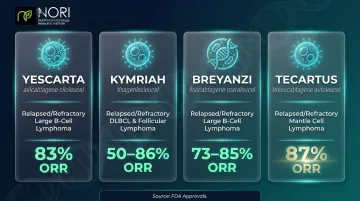
Response rates ranging from 50-87% across approved therapies make CAR-T a meaningful option after standard regimens stop working.
Targeted Therapy
Targeted therapies are drugs that target specific molecular abnormalities within lymphoma cells, with a narrower mechanism that reduces impact on healthy tissue compared to chemotherapy.
BTK inhibitors (Bruton's tyrosine kinase inhibitors) are the most prominent targeted therapy class for lymphoma:
- Acalabrutinib (Calquence) — FDA-approved for mantle cell lymphoma with 81% response rate in relapsed/refractory disease
- Zanubrutinib (Brukinsa) — approved for mantle cell lymphoma, marginal zone lymphoma, and Waldenström's macroglobulinemia
- Pirtobrutinib (Jaypirca) — the first non-covalent BTK inhibitor, approved for relapsed mantle cell lymphoma after prior BTK inhibitor therapy
Note: Ibrutinib (Imbruvica), once widely used, voluntarily withdrew its mantle cell lymphoma and marginal zone lymphoma indications in 2023. Similarly, several PI3K inhibitors (idelalisib, duvelisib, copanlisib, umbralisib) have been withdrawn due to safety concerns or failure to confirm clinical benefit.
Radiation Therapy as a Standalone Option
For slow-growing, localized lymphomas, radiation alone can sometimes be the primary treatment — relevant for patients who want to avoid systemic chemotherapy.
NCCN Guidelines support radiation monotherapy for:
- Nodular lymphocyte-predominant Hodgkin lymphoma (NLPHL) — Involved-Site Radiation Therapy (ISRT) is the preferred standalone treatment for non-bulky stage 1A and contiguous stage 2A disease
- Marginal zone lymphoma — ISRT is preferred for stage 1 or contiguous stage 2 nodal disease
For eligible patients, ISRT delivers treatment directly to the involved site — limiting exposure to surrounding healthy tissue and avoiding the systemic side effects of drug-based regimens.
Complementary Therapies: Mind-Body, Acupuncture, and Lifestyle Support
Evidence-supported mind-body therapies reduce anxiety, fatigue, and pain associated with lymphoma treatment. These are well-tolerated and widely recommended by integrative oncology programs.
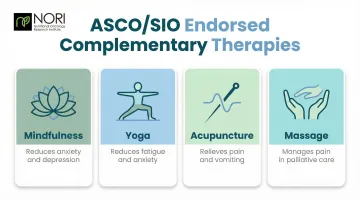
ASCO/SIO formally recommends:
- Mindfulness-based interventions — strongly recommended for anxiety and depression during and after cancer care; meta-analyses confirm significant improvement in cancer-related fatigue
- Yoga — reduces fatigue and anxiety with moderate-to-weak evidence strength depending on cancer type
- Acupuncture — recommended for general cancer pain and chemotherapy-induced vomiting; limited evidence specific to nausea control
- Massage therapy — recommended for patients experiencing pain during palliative or hospice care
Safety Considerations
Not all complementary approaches are safe alongside conventional treatment. Specific risks include:
- St. John's Wort — strongly induces CYP3A4 and P-glycoprotein, reducing ibrutinib concentration by approximately 10-fold, risking treatment failure
- Grapefruit juice — dangerously increases bioavailability of oral targeted therapies
- High-dose antioxidants — may reduce chemotherapy effectiveness or amplify toxicity depending on the regimen
Disclose every supplement and herb to your oncologist before starting — interactions can undermine treatment without any visible warning signs.
Natural Compounds and Plant-Based Agents with Anti-Lymphoma Evidence
Several plant-derived polyphenols and flavonoids have drawn research interest because they target the same survival pathways — PI3K/AKT/mTOR, NF-κB, and STAT3 — that drive lymphoma cell growth. This biological overlap gives researchers a starting point, though most evidence remains early-stage.
Quercetin
Quercetin is a flavonoid found in onions, apples, red grapes, and citrus fruits. Preclinical research across multiple lymphoma cell lines — including DLBCL, T-cell lymphoma, and Burkitt's lymphoma — demonstrates several anti-lymphoma mechanisms:
- Has been investigated for its effects on cellular stress pathways via the mitochondrial pathway by activating caspase-3 and caspase-9
- Arrests cell cycle progression in the G2/M phase
- Inhibits PI3K/AKT/mTOR and STAT3 signaling pathways
- Downregulates Mcl-1 and survivin, sensitizing TRAIL-resistant B-lymphoma cells
Limitation: Most evidence is preclinical (in vitro/in vivo). Clinical trials specifically enrolling lymphoma patients are virtually non-existent.
Curcumin and Resveratrol
- Curcumin downregulates Bcl-2, upregulates caspase-3/8/9, and inhibits NF-κB and STAT3 pathways in lymphoma cell lines
- Resveratrol activates caspase-3, induces G2/M arrest, and modulates the PI3K/AKT/mTOR pathway
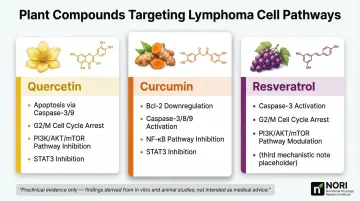
Both compounds face a practical barrier: poor bioavailability. Rapid metabolism and low intestinal absorption limit how much actually reaches target tissues, and clinical utility remains constrained without specialized delivery formats such as nano-formulations.
Medicinal Mushrooms and Immune-Modulating Botanicals
Several botanicals show immunomodulatory and wellness-supporting properties in hematologic cancers:
- EGCG (green tea extract) — Phase I/II trials in chronic lymphocytic leukemia showed oral Polyphenon E was well tolerated and resulted in durable declines in absolute lymphocyte count and lymphadenopathy
- Reishi (Ganoderma lucidum) — preclinical studies show G2/M arrest and apoptosis in hematological cell lines; mouse models demonstrate increased survival and NK cell activity
- Turkey tail (Trametes versicolor / PSK/PSP) — exhibits anti-leukemic and anti-lymphoma activity in vitro; clinical trials show survival advantages primarily in gastrointestinal and breast cancers
- Astragalus — a Phase III randomized controlled trial is evaluating Astragalus for symptomatic relief in high-grade lymphoma patients undergoing chemotherapy
For most of these botanicals, lymphoma-specific clinical data is sparse. The strongest human trial evidence comes from solid tumor populations, which means extrapolating to lymphoma requires caution.
Nutritional Oncology: A Systemic Approach to Lymphoma Support
Cancer cells have distinct metabolic vulnerabilities that can be targeted through diet without harming normal cells. This contrasts sharply with general "eat healthy" advice by focusing on specific biochemical pathways in cancer cells.
Methionine Restriction: Targeting Cancer Cell Metabolism
Cancer cells are highly dependent on methionine, an essential amino acid, while normal cells can survive on alternative one-carbon pathways (metabolic routes that don't rely on methionine). This metabolic difference creates an opportunity: a low-methionine diet combined with targeted nutraceuticals can create an environment that limits lymphoma cell growth.
A Phase I pilot trial of recombinant methioninase infusion in advanced cancer patients (including lymphoma) safely depleted serum methionine to 0.1% of pretreatment levels without clinical toxicity. However, dietary methionine restriction alone proved challenging — one Phase I trial combining methionine-restricted diet with radiation therapy closed due to poor patient accrual and adherence.
Active vs. Passive Nutritional Approaches
These adherence challenges highlight why structure matters. Two broad nutritional frameworks exist for cancer support:
| Approach | Focus | Mechanism |
|---|---|---|
| Passive | Anti-inflammatory eating | Avoiding processed foods, sugar, and inflammatory fats; increasing plant foods |
| Active | Protocol-based restriction | Cycled dietary restriction with nutraceuticals targeting specific cancer cell vulnerabilities |
Active programs go further by exploiting measurable cancer cell weaknesses. This approach:
- Exploits specific metabolic dependencies (methionine, cysteine)
- Depletes cancer cell antioxidant defenses (glutathione)
- Being investigated for effects on cellular health through oxidative stress pathways in nutritional oncology research
- Spares normal cells that can utilize alternative metabolic pathways
NORI Protocol: Science-Based Nutritional Support
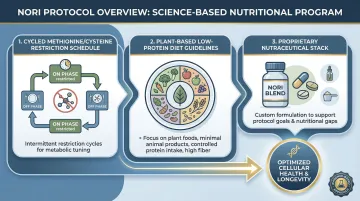
The NORI (Nutritional Oncology Research Institute) Protocol represents a comprehensive example of active nutritional oncology. Grounded in over 20 years of research, NORI combines cycled methionine restriction with proprietary nutraceuticals designed to exploit cancer cell weaknesses.
Key components:
- Cycled methionine/cysteine restriction — limits sulfur amino acids to less than 10 mg/kg body weight per day on a 7-day-on, 7-day-off cycle
- Plant-based diet — naturally low in methionine and cysteine; less than 0.3 grams protein per kg body weight daily
- Proprietary nutraceuticals — sodium selenite (being studied for its role in cellular health pathways in nutritional oncology research), genipin, vitamin B6 with iron, berberine, and other targeted compounds
In documented case reports, Non-Hodgkin's lymphoma patients using this protocol achieved stable disease and normalized blood markers. One NHL patient who declined conventional treatment showed no progression of enlarged lymph nodes, with all blood markers returning to normal range after starting the protocol.
NORI offers free initial consultations and a home-based program accessible worldwide — relevant for patients who want to augment their treatment plan without clinic visits. Contact: 800-634-3804 or info@nutritionaloncology.net.
Frequently Asked Questions
Can you heal from lymphoma?
Many lymphoma types are highly treatable and some are curable. Hodgkin lymphoma carries an 89% five-year survival rate and is considered one of the most curable cancers, while non-Hodgkin lymphoma sits at 74.2%. Outcomes vary by subtype, stage, and treatment response.
What are the first signs of lymphoma?
The most common early symptoms include painless swollen lymph nodes (neck, armpit, groin), unexplained fatigue, night sweats, fever, unintended weight loss, and persistent itching. These symptoms are non-specific and can occur with many conditions, but warrant prompt medical evaluation if they persist.
What is natural killer lymphoma?
Natural killer (NK)/T-cell lymphoma is a rare, aggressive subtype of non-Hodgkin lymphoma. It is universally associated with Epstein-Barr virus infection, is more prevalent in East Asia and Latin America, and typically requires intensive treatment.
Are alternative treatments safe to use alongside chemotherapy for lymphoma?
Some complementary approaches (mind-body therapies, acupuncture) are generally safe alongside chemotherapy and endorsed by ASCO/SIO guidelines. However, certain supplements and herbs can interfere with treatment efficacy or increase toxicity. Disclosing all supplements to your oncologist before starting any CAM approach is essential to avoid interactions.
What diet is recommended for lymphoma patients?
An anti-inflammatory, plant-rich diet low in processed foods, sugar, and alcohol is recommended. More targeted nutritional protocols — such as methionine restriction combined with specific nutraceuticals — are emerging as research-backed adjunct strategies and should be explored with a nutritional oncology specialist.
What natural supplements have been studied for lymphoma?
Quercetin, curcumin, resveratrol, EGCG (green tea extract), and medicinal mushroom compounds are the most researched. While preclinical evidence is promising, most lack large-scale human trials in lymphoma populations and should be used under professional guidance to avoid interactions with conventional treatments.