Introduction
Cancer patients and survivors are increasingly turning to nutritional strategies to complement their treatment—yet most are never told which natural compounds have genuine research behind them or how to use them safely. While 70.4% of cancer survivors use dietary supplements (compared to 51.2% of people without cancer), nearly half begin supplementation without consulting healthcare providers. This gap creates real risks: ineffective products, dangerous drug interactions, and missed opportunities for evidence-based nutritional support.
Understanding what nutraceuticals actually are helps close that gap. These are bioactive compounds derived from food and plants — polyphenols, vitamins, omega-3 fatty acids, probiotics — that go beyond basic nutrition to influence cancer-related biological pathways. Unlike generic wellness supplements, they are concentrated compounds with clinically studied mechanisms: affecting cellular stress pathways being investigated in nutritional oncology research, inhibiting tumor growth signals, modulating inflammation, and protecting healthy tissue from treatment damage.
This guide covers which specific compounds have the strongest evidence, how they integrate alongside conventional treatment, and what patients need to understand about safety, bioavailability, and realistic expectations.
Key Takeaways
- Nutraceuticals are food-derived bioactive compounds with evidence-backed health-supporting properties including anti-inflammatory, antioxidant, and cellular health effects
- Key nutraceuticals studied in cancer include curcumin, quercetin, resveratrol, green tea polyphenols (EGCG), omega-3 fatty acids, and vitamins D and E
- Many nutraceuticals show synergy with chemotherapy, potentially enhancing efficacy while reducing side effects like nausea and fatigue
- Bioavailability, dosing, and drug interactions require professional guidance; nutraceuticals support but do not replace conventional care
- A personalized, evidence-based nutritional program can meaningfully augment a cancer care plan for patients seeking integrative, nontoxic support
What Are Nutraceuticals and Why Do They Matter in Cancer Care?
Nutraceuticals are food components or compounds that provide health benefits beyond basic nutrition. The category includes polyphenols (curcumin, quercetin, resveratrol), carotenoids (lycopene), vitamins, minerals, omega-3 fatty acids, probiotics, and plant-based bioactive compounds like sulforaphane. They occupy a unique space between food and medicine: not pharmaceutical drugs, but concentrated natural agents with measurable biological effects in clinical research.
Why cancer care is suited to nutraceutical support:
Conventional therapies (chemotherapy, radiation, surgery) often lack specificity. They damage healthy cells alongside malignant ones, creating toxic side effects that compromise quality of life. Nutraceuticals can address this gap by targeting cancer-specific pathways without adding systemic toxicity.
Key mechanisms include:
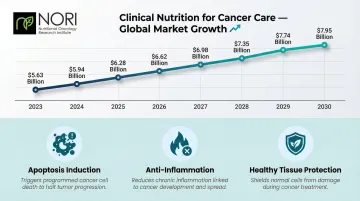
- Has been investigated for its effects on cellular stress pathways in cancer cells
- Inhibiting inflammation that fuels tumor growth
- Protecting normal tissue from chemotherapy damage
The global clinical nutrition for cancer care market reached $5.63 billion in 2023, with projections to hit $7.95 billion by 2030. That level of growth reflects genuine patient demand for integrative options. Yet high demand also means a crowded, unregulated marketplace — making evidence-based guidance essential. Without professional oversight, patients risk ineffective products, dangerous interactions, and wasted resources.
How Nutraceuticals Fight Cancer: Key Mechanisms
Antioxidant and DNA-Protective Effects
Oxidative stress — an excess buildup of reactive oxygen species (ROS) — drives DNA mutations, genomic instability, and cancer initiation. Left unchecked, this process accelerates tumor development.
Nutraceuticals like curcumin, quercetin, EGCG, and resveratrol scavenge free radicals in normal cells, activate the Nrf2 pathway, and boost endogenous protective enzymes (SOD, CAT, GST). At the same time, compounds like resveratrol exhibit pro-oxidant effects at higher concentrations in cancer cells — generating ROS overproduction and affecting cellular pathways, as investigated in nutritional oncology research. The result: normal cells are shielded from oxidative damage while cancer cells, already operating at elevated ROS levels, are being investigated for their interaction with cellular stress conditions in research.
Pro-Apoptotic and Anti-Proliferative Actions
Nutraceuticals affect cellular stress pathways in cancer cells, as investigated in nutritional oncology research, through:
- Upregulation of p53 tumor suppressor protein
- Activation of caspases (3, 8, 9)
- Reduction of anti-apoptotic Bcl-2 proteins
- Cell cycle arrest at G1, S, or G2/M phases
Crucially, this effect is often selective to cancer cells, with ongoing research into their selective effects on different cell types — a meaningful distinction from conventional drugs that damage both.
Anti-Inflammatory Pathways
Chronic inflammation creates a tumor microenvironment that supports cancer growth. Nutraceuticals like curcumin, oleuropein, and quercetin inhibit key inflammatory mediators:
- NF-κB (nuclear factor kappa-light-chain-enhancer)
- COX-2 (cyclooxygenase-2)
- TNF-α, IL-6, IL-1β (pro-inflammatory cytokines)
By disrupting this inflammatory scaffold, nutraceuticals undermine the biological support system tumors depend on.
Epigenetic Modulation
Nutraceuticals influence gene expression without changing DNA sequence — through DNA methylation, histone modification, and microRNA regulation.
Several well-studied compounds demonstrate this directly:
- Genistein reactivates silenced tumor suppressor genes by inhibiting DNA methyltransferases (DNMT)
- Sulforaphane inhibits histone deacetylase (HDAC) activity, enhancing gene expression of p21 and Bax
- EGCG demethylates promoters of cancer-suppressing genes like p16INK4a and RARβ
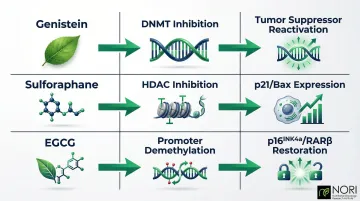
Epigenetic effects are particularly valuable for cancer prevention because they can reverse early malignant changes before tumors form — acting upstream of the disease itself.