What Is Angiogenesis — and Why Does It Hold the Key to Cancer Growth?
Microscopic cancers are far more common than most people realize. Autopsy studies reveal that up to 39% of women in their 40s harbor occult (hidden) breast cancers, and approximately 50% of men in their ninth decade have subclinical prostate cancer. Yet most of these tiny tumors never become life-threatening.
What determines whether these dormant microtumors remain harmless or transform into dangerous disease? The answer lies in angiogenesis — the formation of new blood vessels.
Under normal circumstances, your body tightly suppresses new blood vessel growth except during wound healing, pregnancy, and similar regenerative processes. Cancer cells, however, exploit this mechanism by triggering an "angiogenic switch." This switch recruits a new blood supply that feeds tumor growth and enables cancer cells to spread throughout the body.
That biological vulnerability is where diet enters the picture. Certain foods contain compounds shown to inhibit the signals that trigger angiogenesis — effectively cutting off a tumor's ability to recruit its blood supply.
This article explores the scientific evidence behind an anti-angiogenic diet and identifies the most research-supported foods. While diet alone is not a proven cancer cure, understanding how specific foods inhibit blood vessel formation offers a well-researched, evidence-supported approach to cancer prevention and support.
Key Takeaways
- Anti-angiogenic diets focus on foods that inhibit new blood vessel formation tumors depend on to grow and spread
- Green tea, tomatoes, cruciferous vegetables, soy, and berries each contain compounds — EGCG, lycopene, sulforaphane, genistein, resveratrol — with documented anti-angiogenic activity
- Large-scale studies connect high intake of these foods to meaningfully lower risk across several cancer types, including prostate, breast, and colorectal
- Diets heavy in omega-6 fats and ultra-processed foods — along with chronic stress — may actively promote angiogenesis
- An anti-angiogenic approach works best as part of a comprehensive cancer management plan, not as a standalone treatment
How Tumor Angiogenesis Works: The Science Behind Starving Cancer
Cancer cells use VEGF (vascular endothelial growth factor) as their primary signaling molecule to recruit blood vessels. Research shows VEGF levels are measurably elevated in cancer patients — breast cancer patients have approximately twice the serum VEGF levels compared to healthy individuals.
The Dormancy Limit and Explosive Growth
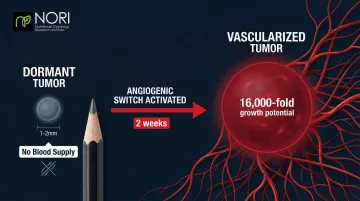
Without a blood supply, solid tumors remain dormant at roughly 1-2 mm³ — about the size of a pencil tip. This size represents a critical threshold. Once angiogenesis begins and tumors acquire new vasculature, they can expand dramatically. Research demonstrates tumors can grow up to 16,000-fold within two weeks of becoming vascularized.
The Angiogenic Balance
In healthy individuals, the body maintains a regulated equilibrium between pro-angiogenic factors and natural inhibitors:
- Pro-angiogenic factors: VEGF, bFGF, PDGF
- Endogenous inhibitors: endostatin, angiostatin, thrombospondin-1
Cancer disrupts this balance, tipping it toward uncontrolled vessel growth. Healthy individuals have low or undetectable angiogenic factor levels in the bloodstream, while cancer patients show elevated levels in serum, plasma, and urine.
Why Early Prevention Matters Most
Antiangiogenic therapy shows greatest effectiveness at early and subclinical stages of tumor development. This biological reality explains why dietary antiangiogenic agents — consumed regularly throughout life — may reduce the risk of dormant tumors ever progressing to dangerous disease.
That same logic extends to metastasis. Tumor angiogenesis allows cancer cells to enter the bloodstream through structurally abnormal, hyperpermeable vessels — creating pathways for malignant cells to escape and spread. Suppressing angiogenesis early therefore addresses both tumor growth and the risk of distant spread.
What Does the Evidence Say About an Anti-Angiogenic Diet?
Researchers have identified potent antiangiogenic molecules within common dietary sources. Both preclinical (laboratory and animal) and epidemiological evidence supports their relevance to cancer prevention. That said, large-scale randomized human trials confirming dietary antiangiogenesis as a clinical treatment are still lacking — a distinction worth keeping in mind.
Population-Level Evidence
Large prospective studies provide compelling associations between specific food groups and reduced cancer incidence:
The European Prospective Investigation into Cancer and Nutrition (EPIC) study found that a 100g daily increase in fruit and vegetable consumption in current smokers was associated with a 15% reduction in lung squamous cell carcinoma risk (HR 0.85; 95% CI 0.76–0.94). The Nurses' Health Study and Health Professionals Follow-Up Study similarly link cruciferous vegetables, fruits, and soy-based foods to reduced incidence of colorectal adenomas and other malignancies.
Clinical Validation: Green Tea and Prostate Cancer
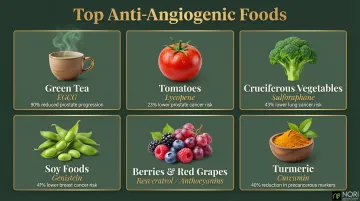
The most compelling interventional evidence comes from a double-blind Italian clinical trial of men with high-grade prostate intraepithelial neoplasia (HGPIN). Subjects received 600mg daily of green tea catechins. After one year, cancer progression occurred in 30% of the placebo group (9 of 30 men) compared to just 3.3% (1 of 30 men) in the green tea group — a remarkable 90% relative risk reduction.
This trial result points toward a broader strategy that researchers call angioprevention.
The Concept of "Angioprevention"
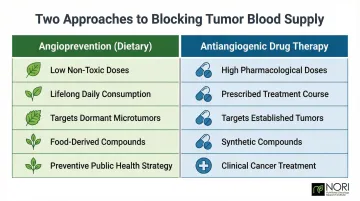
Scientists use the term "angioprevention" to describe using dietary compounds to consistently suppress angiogenesis at low, non-toxic doses throughout life. This is a complementary, long-term public health strategy — distinct from antiangiogenic drug therapy, which uses high doses of synthetic compounds to treat established tumors.
Understanding the Limitations
Preclinical data is strong, and the epidemiological associations are compelling. But for many individual compounds, human trial evidence remains limited:
- Resveratrol: Promising in cell studies; bioavailability challenges limit clinical translation
- Genistein: Epidemiological support from soy-consuming populations; interventional trials mixed
- EGCG (green tea): Strongest human trial evidence to date, particularly for prostate cancer risk
Diet functions most effectively as a supportive layer within a broader cancer management plan. The evidence supports its role in reducing risk and potentially slowing progression — not as a replacement for medical care.
The Most Evidence-Backed Anti-Angiogenic Foods
Green Tea (EGCG)
Epigallocatechin-3-gallate (EGCG), the primary catechin in green tea, ranks among the most studied dietary antiangiogenic compounds. EGCG works through multiple mechanisms:
- Inhibits VEGF receptor activation
- Suppresses MMP-2 and MMP-9 (enzymes that degrade tissue to allow blood vessel invasion)
- Downregulates HIF-1α (hypoxia-inducible factor that triggers angiogenesis)
Meta-analyses show higher green tea intake associates with reduced lung cancer risk (RR 0.82 per 2 cups daily) and colorectal cancer. For maximum benefit, brew green tea for 3-5 minutes and consume 2-3 cups daily.
Tomatoes and Lycopene
Lycopene, the red carotenoid pigment in tomatoes, inhibits angiogenesis by suppressing PDGF signaling. The Harvard Health Professionals Follow-Up Study found that men consuming two or more servings of tomato sauce weekly showed a 23% reduction in prostate cancer risk (RR 0.77) and a 35% reduction in extraprostatic cancers (RR 0.65).
Preparation matters: Cooking tomatoes with olive oil increases plasma trans-lycopene by 82% and cis-lycopene by 40%. Thermal processing breaks down cell walls, substantially improving bioavailability.
Cruciferous Vegetables
Broccoli, cauliflower, kale, Brussels sprouts, and cabbage contain glucosinolates that convert to sulforaphane and indole-3-carbinol during digestion. These compounds:
- Inhibit HIF-1α and STAT3/VEGF signaling
- Have been investigated for their effects on cellular stress pathways in endothelial cells
- Inactivate ERK1/2 and Akt pathways in blood vessel cells
EPIC study data shows a 43% lower lung cancer risk comparing highest versus lowest categories of cruciferous vegetable intake (OR 0.57), with particularly strong protection against squamous cell carcinoma in smokers.
Soy (Genistein)
Genistein, an isoflavone in soybeans, functions through multiple antiangiogenic mechanisms:
- Inhibits VEGF- and bFGF-driven endothelial cell proliferation
- Suppresses MMP-2 and MMP-9 secretion
- Downregulates receptor tyrosine kinase activity
Population data reveals striking geographic differences. Breast cancer incidence rates are significantly lower in Asian women consuming soy-rich traditional diets. When Asian women migrate to the US, their breast cancer risk rises over generations — those with three or four grandparents born in the West had 50% higher risk than those with all grandparents born in the East. The pattern points to diet, not genetics, as the driving factor.
Meta-analyses show soy isoflavone intake lowers breast cancer risk in Asian women (OR 0.59). Aim for 1-2 servings daily of whole soy foods like edamame, tofu, or tempeh.
Red Grapes and Berries (Resveratrol and Anthocyanins)
Resveratrol, found in red grapes, red wine, mulberries, and peanuts, suppresses angiogenesis through:
- COX-2 inhibition
- MMP-9 reduction
- VEGF expression suppression
- Interference with endothelial cell proliferation
Anthocyanins in berries — particularly black raspberries, blueberries, and strawberries — show similar activity. Animal research demonstrates that berry-fed rats developed significantly fewer esophageal tumors compared to controls.
Consume a variety of deeply colored berries daily. Red wine provides resveratrol as well, though whether alcohol is appropriate depends on your individual health context.
Turmeric (Curcumin) and Omega-3 Fatty Acids
Curcumin inhibits angiogenesis through several pathways — downregulating VEGF, bFGF, and MMP-2 gene expression while blocking COX-2 and disrupting endothelial cell tube formation. A Phase II clinical trial showed that 4g daily of curcumin produced a 40% reduction in rectal aberrant crypt foci (precancerous markers) in 44 subjects over six months.
Fatty fish offer a complementary pathway. Omega-3 polyunsaturated fatty acids from salmon, mackerel, and sardines inhibit angiogenesis by downregulating angiopoietin-2 and may competitively block pro-angiogenic omega-6 derivatives. EPIC cohort data shows the highest quintile of fish intake reduces colorectal cancer risk (HR 0.88; 95% CI 0.80-0.96).
Foods and Habits That Promote Tumor Angiogenesis
Omega-6 Polyunsaturated Fatty Acids
Omega-6 PUFAs — abundant in sunflower oil, corn oil, and peanut oil — have opposite effects to anti-angiogenic compounds. In vitro studies show linoleic acid and arachidonic acid stimulate endothelial cell migration and tube formation. Arachidonic acid increases endothelial cell migration by 70-80%, comparable to bFGF stimulation.
Action step: Limit cooking oils high in omega-6 fats. Choose olive oil, avocado oil, or small amounts of coconut oil instead.
Lifestyle Factors That Activate Angiogenesis
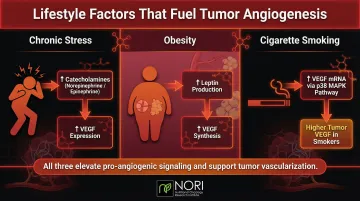
Beyond diet, several lifestyle factors directly promote tumor vascularization:
- Chronic stress raises catecholamines (norepinephrine and epinephrine), which directly induce VEGF expression and tumor vascularization. In ovarian cancer mouse models, β-adrenergic signaling increased tumor blood vessel density and elevated VEGF, MMP2, and MMP9 expression.
- Obesity elevates circulating pro-angiogenic factors through leptin production. Leptin-VEGF crosstalk intensifies VEGF synthesis as body fat rises, directly linking excess weight to elevated cancer risk.
- Cigarette smoking acutely stimulates VEGF mRNA expression and secretion in airway smooth muscle cells via the p38 MAPK pathway. Tumor VEGF levels in smokers are consistently higher than in non-smokers.
The Refined Carbohydrate Connection
Diets high in refined carbohydrates drive obesity and chronic inflammation — both well-established pro-angiogenic environments. High sugar and refined carbohydrate intake correlate with worse colorectal cancer outcomes and elevated systemic inflammation. These metabolic states upregulate pro-angiogenic factors like IGF-1 and VEGF, creating conditions that support tumor growth.
How Anti-Angiogenic Nutrition Fits Into a Broader Cancer Protocol
An anti-angiogenic diet delivers maximum benefit as part of an integrative, multi-strategy approach — not as a standalone replacement for conventional treatment or medical oversight. The scientific rationale for dietary antiangiogenesis is strongest in three contexts:
- Early intervention: Preventing dormant microtumors from acquiring blood supply
- Dormancy maintenance: Keeping microscopic residual disease in check
- Prevention of recurrence: Reducing blood supply to any remaining cancer cells
NORI's protocol, built on founder Mark Simon's 20+ years of focused cancer research, goes beyond anti-angiogenic foods by incorporating methionine restriction and targeted nutraceutical combinations. Anti-angiogenic dietary principles align with and complement this broader nutritional framework, particularly for patients looking to augment their conventional treatment plan or support long-term cancer management.
The NORI approach recognizes that a plant-based diet naturally provides anti-angiogenic benefits alongside other therapeutic mechanisms: reduced inflammation, improved glucose regulation, lowered IGF-1, and enhanced alkalinity. Targeting these pathways together addresses cancer cell vulnerabilities that no single intervention reaches alone.
Working With Professionals
Before making significant dietary changes (particularly during active treatment), work with a qualified nutritional oncology professional. Some dietary interventions can exacerbate treatment side effects, and personalized guidance matters. NORI offers free initial consultations at 800-634-3804 to discuss how anti-angiogenic nutrition can be safely integrated into your specific situation.
Frequently Asked Questions
What foods prevent angiogenesis in cancer patients?
The top evidence-supported options include:
- Green tea (EGCG) and pomegranate
- Tomatoes cooked with olive oil (lycopene)
- Cruciferous vegetables — broccoli, kale (sulforaphane)
- Soy products (genistein) and omega-3-rich fish
- Red grapes and berries (resveratrol, anthocyanins)
- Turmeric (curcumin)
What are the nine foods to avoid for cancer?
The focus should be on patterns, not a fixed list. Avoid or minimize:
- Processed and factory-farmed meats
- High omega-6 oils (corn, sunflower)
- Refined sugars and ultra-processed foods
- Excess alcohol and cigarette smoke exposure
Overall dietary patterns matter more than any single food.
Can an anti-angiogenic diet replace cancer care?
No clinical evidence supports diet alone as a replacement for proven cancer care. The strongest evidence positions an anti-angiogenic diet as a complementary strategy — best used alongside medical treatment, for prevention, or to support long-term management after primary care.
How does angiogenesis help cancer cells grow?
Tumors cannot grow beyond roughly 1-2mm without a new blood supply. Cancer cells trigger production of VEGF and other signals that recruit new blood vessels. Once vascularized, tumors can grow 16,000-fold within weeks and spread cancer cells into the bloodstream through leaky tumor vessels.
Is green tea effective against cancer through anti-angiogenesis?
EGCG in green tea is among the most studied dietary anti-angiogenic compounds, with strong preclinical evidence of VEGF inhibition. One Italian study found daily green tea catechins reduced prostate cancer progression by 90%, though larger clinical trials are still needed to confirm these results.
What lifestyle factors promote angiogenesis in cancer?
Chronic psychological stress, obesity, cigarette smoking, and physical inactivity all link to elevated pro-angiogenic signaling. Managing these factors alongside dietary changes provides a more comprehensive approach to suppressing tumor angiogenesis and supporting overall cancer management.