Thyroid cancer patients face two distinct nutrition challenges: short-term dietary preparation for treatment (the low-iodine protocol), and long-term dietary choices that may influence cancer progression, recurrence risk, and quality of life.
This guide covers the science-backed foods to prioritize, which foods to limit or avoid, how the low-iodine diet works, and what emerging nutritional research means for long-term thyroid cancer management.
Key Takeaways
- The low-iodine diet (under 50 mcg/day) is temporary and treatment-specific—not a permanent thyroid cancer diet
- Prioritize: Raw vegetables, tomatoes, persimmons, citrus fruits, green tea, and beta-carotene-rich produce
- Limit: Processed meats with nitrites, high-temperature cooked poultry and pork, high-dose iodine supplements, and seaweed
- Long-term nutrition goes beyond iodine—plant-forward, low-methionine diets show emerging promise for cancer cell suppression
- Always work with your oncology team or registered dietitian before major dietary changes
Why Diet Matters for Thyroid Cancer
Thyroid cancer incidence rose rapidly for decades, and while improved detection explains much of this increase, epidemiological research consistently links dietary patterns to risk and disease progression.
Diet influences thyroid cancer through several biological mechanisms:
Iodine intake directly affects thyroid-stimulating hormone (TSH) levels, which regulate thyroid cell growth. Both excess and deficiency can promote abnormal cell behavior.
Body weight compounds this risk considerably. Obesity increases thyroid cancer risk by 25% in overweight individuals and 55% in obese individuals compared to normal-weight peers. The European EPIC study found that individuals with the highest total energy intake had 29% higher risk of differentiated thyroid carcinoma, pointing to caloric balance and weight management as meaningful preventive steps.
Diet plays different roles at different stages:
- Before treatment: follow a low-iodine protocol to prepare for radioactive iodine therapy
- During treatment: prioritize nutrition and immune support to tolerate the process
- After treatment: focus on weight management and reducing recurrence risk long-term
The Low-Iodine Diet: What It Is and When You Need It
The low-iodine diet (LID) is a short-term protocol—typically 1 to 2 weeks before radioactive iodine (RAI) therapy or diagnostic scanning—designed to keep iodine intake below 50 micrograms per day.
By depleting the body's iodine stores, thyroid cells — including any residual cancerous tissue — become starved for iodine and rapidly absorb the radioactive dose used in treatment or imaging. This protocol applies specifically to differentiated thyroid cancers (papillary and follicular types). It is not used for anaplastic or medullary thyroid cancer.
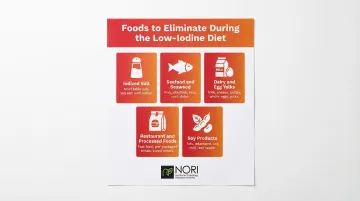
Foods to Eliminate During the Low-Iodine Diet
Here is what to cut during the LID window:
- Iodized salt and sea salt — switch to non-iodized salt only, as this is the primary iodine source for most Americans
- All seafood — saltwater fish, shellfish, and seaweed (kelp, nori, kombu, wakame) are among the most concentrated iodine sources available
- Dairy products and egg yolks — milk, cheese, yogurt, and butter carry significant iodine from cattle feed; some institutions permit up to 1 oz of milk per day, so confirm with your care team
- Restaurant and processed foods — iodized salt use cannot be verified in commercial kitchens; fast food is particularly high-risk
- Soy products — tofu, soy milk, and soy sauce should be avoided; animal studies suggest high soy intake may interfere with radioactive iodine uptake, and many soy products contain iodine-containing additives
What IS Allowed on a Low-Iodine Diet
- Fresh fruits and vegetables (all types)
- Egg whites
- Freshwater fish
- Fresh unprocessed meats in limited amounts (under 6 oz/day)
- Unsalted nuts and nut butters
- Whole grains (oats, rice, quinoa, pasta without dairy)
- Non-iodized salt
- Plant-based milks (coconut, almond, oat)
Hidden Iodine Sources to Avoid
Check food labels carefully for these additives:
- Red Dye #3 (erythrosine, E127): contains high iodine levels
- Potassium iodate or calcium iodate: used as commercial dough conditioners
- Carrageenan, agar-agar, alginate, algin: all derived from seaweed or kelp
- Whey and casein: dairy derivatives found in protein powders and many packaged foods
Critical Reminders
This diet is temporary. It is not designed to be nutritionally complete long-term and should only be followed when directed by your healthcare provider. Do not stop medications without physician guidance. Pause vitamins and supplements containing iodine (including kelp-based supplements) during this period.
Foods That Help Fight Thyroid Cancer
Long-term thyroid cancer management goes well beyond the temporary low-iodine protocol. These foods have protective evidence behind them for ongoing risk reduction and supporting the body's resilience.
Vegetables and Fruits with Protective Evidence
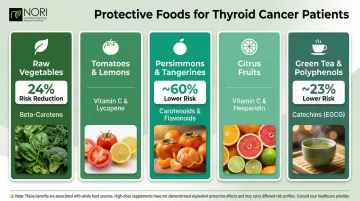
High vegetable intake reduces thyroid cancer risk by approximately 24% according to meta-analyses. Specific protective foods include:
Raw vegetables — A South Korean case-control study found raw vegetable consumption significantly inversely associated with malignant thyroid cancer (OR 0.20, meaning 80% lower risk for highest vs. lowest intake).
Tomatoes and lemons — Greek studies found fresh tomatoes and lemons significantly inversely associated with thyroid cancer risk.
Persimmons and tangerines — Korean research documented inverse associations, particularly for persimmons (OR 0.39, roughly 60% lower risk).
Citrus fruits — Show protective benefits in most studies, though context matters. One Norwegian study found an unexpected positive association with very high citrus intake, suggesting moderation is key.
Why they work: Colorful vegetables and fruits provide antioxidants—including beta-carotene, vitamin C, and polyphenols—that protect cells from oxidative damage and inhibit proliferation of abnormal cells. Notably, beta-carotene shows an inverse association with thyroid carcinoma, while retinol (preformed vitamin A) showed a positive association in Italian research — which makes whole food sources preferable to high-dose supplements.
Tea and Polyphenol-Rich Foods
High tea consumption (particularly green and black tea) is associated with a roughly 23% lower risk of thyroid cancer in Western populations. The benefit appeared primarily in European and American populations, not Asian populations, possibly due to different baseline iodine status.
Polyphenols (catechins, flavonoids) in tea have demonstrated anti-proliferative effects on thyroid cancer cells in laboratory research. Polyphenolic extracts from grape stems have also shown anticarcinogenic activity against thyroid cancer cells in lab studies.
To benefit, include polyphenol-rich whole foods regularly: berries, grapes, tea, and dark leafy greens.
Iodine Balance Through Whole Foods
Both iodine deficiency AND excess are associated with increased thyroid cancer risk. Deficiency raises risk of follicular carcinoma, while excess raises risk of papillary carcinoma.
For patients not on a low-iodine protocol, the goal is optimal iodine balance through whole foods rather than supplementation. Freshwater fish and moderate iodine-containing vegetables help maintain healthy levels — particularly for patients in iodine-deficient regions — without overshooting.
Foods Thyroid Cancer Patients Should Avoid
Beyond the pre-treatment low-iodine protocol, certain dietary patterns consistently appear in research as risk factors for thyroid cancer. These are worth addressing as part of any long-term nutrition strategy.
Processed and High-Temperature Cooked Meats
Multiple studies found significant positive associations between high consumption of pork, poultry, and processed meats and thyroid cancer risk.
Cooking meat at high temperatures produces carcinogenic compounds — heterocyclic amines, polycyclic aromatic hydrocarbons, and N-nitroso compounds. Processed meats also contain dietary nitrites, which show a positive association with thyroid cancer risk: the Shanghai Women's Health Study found a 96% increased risk (RR 1.96) for highest vs. lowest nitrite intake from processed meats.
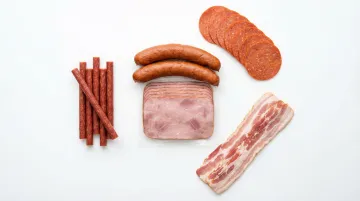
Shifting the balance toward plant proteins doesn't require eliminating meat entirely — but the evidence supports limiting it:
- Limit processed meats: bacon, sausage, deli meats, and salted or cured meats
- Reduce charred or high-temperature cooked meats
- Replace with plant proteins where possible
Dietary Nitrates, Nitrites, and Contaminated Water
The nitrites in processed meats are part of a wider concern. Dietary nitrates and nitrites are classified as probable carcinogens, and the NIH-AARP Diet and Health Study found positive associations between nitrate/nitrite intake and thyroid cancer risk — with a particularly strong effect in men (RR 2.28 for highest dietary nitrate intake).
Key sources:
- Processed meats — Primary concern due to added nitrites
- Nitrate-contaminated drinking water — Iowa Women's Health Study found water nitrate >5 mg/L for ≥5 years increased thyroid cancer risk 2.6-fold
- High-nitrate vegetables — Leafy greens contain natural nitrates, though this effect appears mainly relevant in those already eating very large quantities
What to do:
- Test drinking water for nitrate levels if you live in agricultural areas
- Avoid processed meats with added nitrites
- When consuming leafy greens (which provide many cancer-protective benefits), opt for organically grown varieties when possible
Excessive Iodine Sources and Supplements
Beyond the low-iodine protocol period, excess iodine from over-supplementation or very high seaweed consumption remains a concern. Japanese research found frequent seaweed intake in postmenopausal women associated with nearly 4-fold increased thyroid cancer risk (HR 3.81).
Regular multivitamin use — especially formulas containing iodine from kelp — also showed positive associations with thyroid cancer risk in large US studies.
Practical guidance:
- Avoid high-dose iodine supplements unless specifically prescribed
- Reduce or eliminate regular seaweed consumption (especially kelp products)
- Choose multivitamins without iodine, or confirm appropriate iodine levels with your physician
Long-Term Nutritional Strategies for Thyroid Cancer Patients
For thyroid cancer survivors and patients managing their disease long-term, the most important dietary principle is a predominantly plant-based, whole-food dietary pattern.
This aligns with weight management evidence—obesity (BMI > 30) is associated with notably higher thyroid cancer risk and likely with recurrence risk. Plant-forward eating patterns support healthy weight while providing cancer-protective micronutrients.
Methionine Restriction: An Emerging Approach
Cancer cells—including thyroid cancer cells—have a known dependency on the amino acid methionine for growth and survival, a concept called "methionine dependence." A plant-based diet is naturally lower in methionine than a meat-heavy diet, which may help create an unfavorable metabolic environment for cancer cell proliferation. Reducing protein intake — especially animal protein — without causing malnutrition can support metabolic wellness, reduce IGF-1 levels, and is being explored alongside conventional care in ongoing research.
This is the foundation of the NORI Protocol, developed by the Nutritional Oncology Research Institute, which combines cycled methionine restriction with targeted nutraceutical support. In 2012, NORI documented a case report of a Stage IV papillary thyroid cancer patient who reported significant improvement using this approach — the patient's thyroglobulin tumor marker dropped from 13 to nearly undetectable within 3 months and remained stable as of October 2019.
More recent case reports show consistent results:
- One Stage IV papillary thyroid cancer patient's thyroglobulin dropped from 6.0 to 0.25 within two months using a methionine-restricted diet combined with sodium selenite and vitamin E delta tocotrienol.
- Another patient achieved thyroglobulin stabilization at 5.9 after an initial drop from 8.0, maintaining stability for over a year while in excellent health.
These outcomes reflect NORI's home-based program in practice. The program includes personalized guidance, unlimited support, and all necessary nutraceuticals — with free initial consultations available at 800-634-3804.
Practical Long-Term Dietary Framework
For thyroid cancer patients, an evidence-informed long-term dietary approach includes:
- Emphasize whole vegetables and fruits daily, especially raw vegetables
- Minimize processed and high-temperature cooked meats
- Maintain healthy body weight through caloric moderation
- Choose polyphenol-rich foods (tea, berries, olive oil)
- Monitor iodine intake to avoid both excess and deficiency
- Limit processed foods with hidden nitrates and additives
- Consider working with an integrative oncology nutritionist for personalized guidance beyond standard-of-care advice
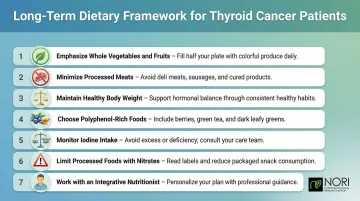
Together, these strategies address distinct biological targets: inflammation, iodine balance, carcinogenic exposures, and cancer cell metabolic vulnerabilities. No single dietary change achieves all of this — consistent application across each area is what makes the difference.
Frequently Asked Questions
What foods help fight thyroid cancer?
Raw vegetables (particularly tomatoes, persimmons, and tangerines), polyphenol-rich foods (green tea, berries, grape products), and beta-carotene-containing produce show the strongest protective evidence. Overall, a plant-forward dietary pattern reduces thyroid cancer risk by approximately 24% compared to low vegetable intake.
What foods should thyroid cancer patients avoid?
Processed and cured meats high in nitrites, excessive high-temperature cooked poultry and pork, high-dose iodine supplements, and regular seaweed consumption. Also avoid processed foods with hidden iodine additives like iodate bread conditioners and Red Dye #3.
Is the low-iodine diet the same as a thyroid cancer diet?
No. The low-iodine diet is a short-term (1–2 week) protocol specifically for patients preparing for radioactive iodine therapy. It is not a general thyroid cancer diet and should not be followed long-term without medical direction.
What role does iodine play in thyroid cancer nutrition?
Both iodine deficiency and excess are associated with different types of thyroid cancer risk. Deficiency increases follicular carcinoma risk, while excess increases papillary carcinoma risk. For long-term thyroid health, the goal is balanced iodine intake within a moderate, food-based range.
Can diet help prevent thyroid cancer recurrence?
Research supports a plant-forward, whole-food dietary pattern for reducing ongoing thyroid cancer risk, though no diet can guarantee recurrence prevention. Practical steps include maintaining a healthy weight, limiting processed meats, and consistently incorporating antioxidant-rich vegetables and polyphenol-rich foods.
Disclaimer: The information presented is for educational purposes only and is not intended as medical advice. Always consult with your oncology team before making significant dietary changes during or after thyroid cancer treatment.