Introduction
Prostate cancer is the second-leading cause of cancer death in American men, with an estimated 333,830 new cases and 36,320 deaths projected for 2026. Yet a growing number of men are turning to holistic and alternative approaches—either alongside or instead of conventional treatment—driven by concerns about side effects like sexual dysfunction, urinary incontinence, and fatigue, as well as the real limitations of surgery, radiation, and androgen deprivation therapy.
Approximately 56% of prostate cancer patients report using complementary and alternative medicine. Their motivations include guidance on diet and nutrition, counseling on herbs and supplements, and managing persistent symptoms like fatigue, sexual dysfunction, and urinary problems. This reflects a broad shift toward patient-centered care that addresses the whole person, not just tumor markers.
Understanding your options is the first step. This guide covers dietary strategies that target prostate cancer cells, natural compounds with meaningful clinical evidence, mind-body practices that reduce treatment side effects, and structured nutritional protocols worth knowing. You'll come away with a clear, practical picture of what works, what doesn't, and how to integrate holistic approaches safely alongside conventional care.
TLDR: Key Takeaways
- Holistic approaches are not one-size-fits-all: they range from dietary protocols and phytochemicals to mind-body practices, working best when tailored to your stage and goals
- Several natural compounds—curcumin, EGCG (green tea), sulforaphane, lycopene, soy isoflavones—have preclinical and clinical evidence for slowing prostate cancer growth and lowering PSA
- Diet is foundational: plant-rich, low-methionine eating patterns starve prostate cancer cells of key growth nutrients
- Always inform your oncologist about holistic treatments—some supplements interfere with chemo or radiation, increasing recurrence risk
- Structured protocols like NORI's combine cycled methionine restriction with targeted nutraceuticals—a research-backed, home-based approach available worldwide
What "Holistic" Actually Means for Prostate Cancer
Understanding the Three Approaches
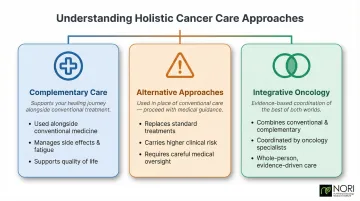
Holistic cancer care isn't a single thing—it encompasses three distinct approaches:
Complementary: Used alongside conventional treatment to manage side effects, support immune function, and improve quality of life. This is where most patients benefit.
Alternative: Used instead of conventional care. This carries risk, especially for aggressive disease, and should never be attempted without medical guidance.
Integrative Oncology: A coordinated combination of evidence-based conventional and holistic therapies. The Society for Integrative Oncology defines it as "patient-centered, evidence-informed care that utilizes mind and body practices, natural products, and lifestyle modifications alongside conventional cancer care."
Understanding which category fits your situation is the first step — and it shapes which holistic tools are actually appropriate for your stage and goals.
Why Prostate Cancer Patients Turn to Holistic Approaches
With approximately 56% of prostate cancer patients using CAM therapies, the motivations are clear:
- Managing treatment side effects (erectile dysfunction, urinary incontinence, fatigue)
- Boosting immune function
- Reducing recurrence risk after initial treatment
- Avoiding the devastating quality-of-life impacts of chemotherapy and radiation
- Addressing the whole-person needs that conventional oncology often ignores
Why Prostate Cancer Responds to Nutritional Intervention
Prostate cancer is particularly amenable to holistic approaches due to several biological characteristics:
- Growth depends on testosterone and DHT, creating hormonal vulnerabilities that diet and natural compounds can exploit
- Progression is often slow enough for nutritional interventions to produce measurable, trackable effects
- Cancer cells rely on specific metabolic pathways — including lipid synthesis and the methionine salvage pathway — that respond to targeted dietary changes
- Tumor cells are known to have elevated ROS levels; pro-oxidant nutraceuticals are being investigated for their interaction with these cellular conditions while research continues into their selective effects
Dietary Strategies That Target Prostate Cancer Cells
The Plant-Based Advantage
A 2024 cohort study of 2,062 men found those in the highest quintile of a plant-based diet index had a 47% lower risk of prostate cancer progression (HR 0.53). Similarly, the Health Professionals Follow-Up Study (N=47,239) showed greater consumption of a healthful plant-based diet was associated with a lower risk of fatal prostate cancer (HR 0.81).
Why plant-based diets work:
- Phytochemicals: Compounds like sulforaphane, lycopene, and EGCG directly inhibit cancer cell growth
- Fiber: Reduces circulating androgens and improves gut health
- Reduced saturated fat: Lowers inflammatory pathways that promote tumor growth
- Antioxidants: Support DNA repair and reduce oxidative damage
Methionine Restriction: Starving Cancer Cells Selectively
Prostate cancer cells are uniquely dependent on the amino acid methionine for growth and DNA methylation. Normal cells can adapt when methionine is scarce by using an internal recycling process called the salvage pathway. Cancer cells largely lack this flexibility, making them far more vulnerable to methionine deprivation.
How methionine restriction works:
A low-methionine diet—achieved by reducing animal proteins and emphasizing plant-based foods—has been studied for its effects on cancer cell metabolism. Laboratory studies show methionine restriction causes prostate cancer cells (PC-3 line) to arrest in the G2/M phase, an area of ongoing nutritional oncology investigation.
Practical implementation:
- Limit daily methionine and cysteine intake to less than 10 mg/kg body weight
- Emphasize fruits, vegetables, and select whole grains
- Minimize animal proteins (meat, eggs, dairy)
- Restrict overall protein to less than 0.3 grams per kilogram body weight daily — reducing animal protein in this way, without causing malnutrition, is being explored in nutritional oncology research for its role in metabolic wellness and its relationship to IGF-1 levels
Evidence-Supported Specific Foods
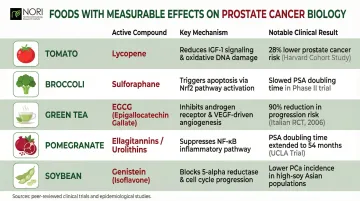
Research points to several foods with measurable effects on prostate cancer biology:
- Cooked tomatoes: Heating releases lycopene and converts it to a more absorbable form, reducing the oxidative stress that drives cancer progression.
- Cruciferous vegetables (broccoli, kale): Sulforaphane activates Nrf2, inhibits HDAC, and suppresses androgen receptor transcription. A Phase II trial in men with recurrent prostate cancer showed broccoli sprout extract lengthened PSA doubling time from 6.1 to 9.6 months (p=0.044).
- Green tea: EGCG (epigallocatechin gallate) inhibits NF-κB signaling. A 2006 trial in men with high-grade PIN showed green tea catechins reduced prostate cancer incidence to 3% versus 30% in the placebo group over one year.
- Pomegranate: Ellagitannins slow PSA doubling time, though randomized trials show the effect appears at both low and high doses — underscoring the importance of placebo controls in interpreting these results.
- Soy isoflavones: Genistein reduces androgen receptor activity through estrogen receptor-beta activation, offering a natural mechanism to lower androgen signaling in prostate tissue.
Foods to Minimize
Just as some foods appear protective, others create conditions that support tumor growth:
- High-calcium dairy: Multiple studies link high dairy and supplemental calcium intake with increased prostate cancer risk, likely through IGF-1 elevation and altered androgen metabolism.
- High-fat animal products: Saturated fats promote inflammatory pathways and androgen signaling that accelerate tumor growth.
- Processed foods and refined sugars: Insulin spikes and chronic inflammation from these foods create metabolic conditions favorable to cancer proliferation.
Whole Foods vs. Supplements
Whole-food sources provide synergistic effects that isolated compounds cannot replicate. Eating cooked tomatoes, for example, delivers lycopene alongside fiber, vitamin C, and other phytochemicals that work together — a combination no single capsule can reproduce. The same principle applies across the board: sulforaphane from broccoli, consumed as part of a meal, behaves differently in the body than a standardized extract at equivalent doses.
Natural Compounds and Nutraceuticals with the Strongest Evidence
Phytochemicals That Target Androgen Receptor Signaling
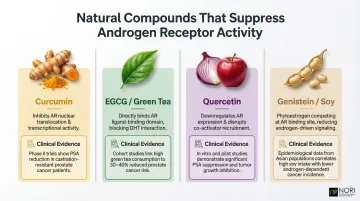
The androgen receptor (AR) drives prostate cancer growth. Several natural compounds suppress AR expression or activity:
| Compound | Primary Mechanism | Key Evidence |
|---|---|---|
| Curcumin (turmeric) | Suppresses NF-κB, inhibits tumor invasion, reduces bone metastasis markers | Phase II RCT confirmed safety during radiotherapy; limited by poor bioavailability — requires specialized formulations |
| EGCG (green tea catechin) | Inhibits AR activity and oxidative stress pathways | Reduced prostate cancer incidence in high-risk patient trials |
| Quercetin | Inhibits AR transcription, being investigated for effects on cellular stress pathways | Demonstrated in prostate cancer cell line studies |
| Genistein (soy isoflavones) | Binds estrogen receptor-beta, downregulates AR | Reduced PSA levels in clinical studies |
Sulforaphane: The Most Clinically Studied Phytochemical
Sulforaphane from cruciferous vegetables has undergone rigorous clinical testing. A Phase II trial (N=20, 2015) in men with recurrent prostate cancer showed broccoli sprout extract lengthened PSA doubling time from 6.1 to 9.6 months (p=0.044), though only one patient achieved a ≥50% PSA decline.
Mechanisms:
- Targets both androgen receptor and cancer stem cell populations
- Activates Nrf2 antioxidant response
- Inhibits histone deacetylase (HDAC)
- Has been investigated for its effects on cellular stress pathways in cancer cells
Anti-Inflammatory and Anti-Metastatic Compounds
Beyond AR-targeting phytochemicals, a separate class of compounds works through anti-inflammatory and anti-metastatic pathways — with notably mixed results in controlled trials.
Modified Citrus Pectin (MCP) acts as a galectin-3 competitive inhibitor. A Phase II study (N=59, 2021) in non-metastatic biochemically relapsed prostate cancer showed 75% of patients had improved PSA doubling time at 6 months (p=0.003). The limitation: it was a single-arm study without a placebo control, which matters given what pomegranate research revealed.
Early pomegranate extract trials reported PSADT increasing dramatically — from 15 to 54 months — but a subsequent randomized trial told a different story. Both low-dose and high-dose arms lengthened PSADT similarly (11.9 to 18.5 months), strongly suggesting a placebo effect. This underscores why controlled trials are essential before drawing conclusions from single-arm studies.
Resveratrol showed no effect on prostate size or PSA in a randomized controlled trial, though a 1g dose did significantly reduce androgen precursors like DHEA — a partial finding worth monitoring in future research.
Critical Safety Warnings
Not every well-marketed supplement is safe. Three evidence-based warnings apply directly to prostate cancer patients:
- Vitamin E: The 2011 SELECT trial update (N=35,000+) found 400 IU/day significantly increased prostate cancer risk by 17% (HR 1.17, p=0.008). High-dose isolated synthetic supplements carry real harm potential.
- Concentrated green tea extract: Unlike whole-food green tea, catechin extracts carry documented hepatotoxicity risk, with multiple reports of acute liver injury. Stick to brewed tea.
- Antioxidants during treatment: NCI and SWOG S0221 trial data indicate that supplemental Vitamins A, C, and E during chemotherapy or radiotherapy may shield cancer cells from oxidative damage — potentially increasing recurrence and mortality risk.
Mind-Body Practices and Lifestyle Modifications
Yoga: Clinical Evidence for Symptom Management
A randomized Phase II trial (N=68, 2017) of twice-weekly yoga during external beam radiation therapy showed significantly less global fatigue and improved sexual health scores compared to controls. A pilot RCT (N=29, 2022) showed yoga improved quality of life, increased CD8+ T-cells, and reduced inflammatory cytokines.
Mindfulness Meditation: Reducing Stress and Inflammation
Mindfulness-Based Stress Reduction programs in advanced cancer patients significantly improved quality of life and reduced stress and anxiety. Participants also showed decreased salivary cortisol and IL-6 levels — biomarkers directly linked to cancer progression.
Documented outcomes include:
- Reduced perceived stress and anxiety scores
- Lower cortisol levels across the treatment period
- Decreased IL-6 inflammatory markers
Exercise: Reducing Prostate Cancer Mortality
The Health Professionals Follow-Up Study (N=2,705, 2011) found men with ≥3 hours per week of vigorous activity had a 61% lower risk of prostate cancer death (HR 0.39, p=0.03).
Recommended types:
- Aerobic exercise (brisk walking, cycling, swimming)
- Resistance training (weightlifting, bodyweight exercises)
- High-impact activities (for bone health)
For men on androgen deprivation therapy, AUA and ACSM guidelines specifically recommend combined moderate-to-vigorous resistance plus high-impact training to prevent fractures and counteract bone and muscle loss.

Acupuncture and Oncology Massage
Beyond exercise, hands-on and needling therapies offer targeted relief for treatment side effects common in prostate cancer patients.
Acupuncture
SIO/ASCO guidelines recommend acupuncture for general cancer pain and musculoskeletal pain. A single-arm study (N=22, 2021) in prostate cancer patients on ADT showed 55% achieved a >50% reduction in hot flash scores.
Oncology Massage
Oncology massage effectively reduces anxiety, pain, and fatigue during treatment. Avoid application directly over tumor sites or implanted devices, and work only with certified oncology massage therapists.
Moving Beyond Individual Supplements: A Structured Nutritional Protocol
The Limitation of Random Supplementation
Taking isolated nutrients without a coherent dietary framework reduces efficacy. Prostate cancer operates across multiple biological pathways at once: androgen signaling, lipid synthesis, and oxidative stress regulation, among others. A protocol that addresses these pathways together consistently outperforms random supplementation.
Cycled Methionine Restriction with Targeted Nutraceuticals
Research shows combining methionine restriction with pro-oxidant natural compounds is being investigated for its effects on cellular health pathways in nutritional oncology research. When cancer cells are deprived of methionine, certain metabolic pathways are affected. Natural agents with pro-oxidant effects include high-dose Vitamin C, piperlongumine, menadione, and certain carotenoids; these are also being explored alongside conventional care approaches in ongoing research.
A 2023 study demonstrated that intermittent dietary methionine deprivation is being investigated in nutritional oncology research for its effects on cellular health pathways and potential synergy with checkpoint blockade immunotherapy, whereas prolonged continuous deprivation allows adaptation. This cycled approach supports overall wellbeing cells from developing resistance.
The NORI Protocol: A Structured, Science-Based Home Program
That science translates directly into practice through the Nutritional Oncology Research Institute (NORI) Protocol. Founded by Mark Simon (CN, CHCC, CPBN) following two decades of focused research, the protocol pairs cycled methionine restriction (7 days on, 7 days off) with proprietary nutraceutical formulations designed to exploit specific weaknesses in cancer cell metabolism.
The protocol works on two fronts simultaneously:
- The 7-day on/off dietary cycle starves cancer cells of methionine while preventing the metabolic adaptation that continuous restriction allows
- Proprietary nutraceutical combinations—including sodium selenite, vitamin K3, and vitamin E delta tocotrienol—are being studied for their role in oxidative stress pathways and cellular health in nutritional oncology research
- Normal cells stay protected because of their greater metabolic flexibility
Prostate cancer outcomes:
In a documented case, a 53-year-old patient with Stage IV prostate cancer and a PSA of 395 combined the NORI Protocol with hormonal therapy (Lupron). Within one month, his PSA dropped to 30; within two months, it dropped to 1.7 (normal range: less than 4.0). As of September 2020, MRI imaging showed no metastatic lesions. This represents a client-reported outcome from a case report.

For patients concerned about access and cost, the program is designed to remove common barriers:
- Completely home-based—no clinic visits required
- Worldwide program with unlimited support included
- Free initial consultation (800-634-3804)
- Flat-fee monthly, yearly, or lifetime plans covering all nutraceuticals and ongoing guidance
Quality-of-life advantage:
Patients following structured nutritional programs like NORI's report maintaining high quality of life throughout, without the debilitating side effects of chemotherapy or radiation. This makes nutritional approaches particularly appealing for active surveillance patients or as adjunct support during conventional treatment.
Working with Your Care Team: Integrating Holistic and Conventional Approaches
How to Have Productive Conversations with Your Oncologist
Getting the most from these conversations comes down to preparation. Three practices make a real difference:
- Bring specifics. Instead of "I want to try natural treatments," say: "I'm considering sulforaphane from broccoli sprout extract at X dose based on this Phase II trial — can we discuss potential interactions with my radiation schedule?"
- Ask about interactions. Antioxidants, for example, can shield cancer cells during radiation or chemotherapy, reducing treatment efficacy. Your oncologist needs to know what you're taking.
- Request biomarker monitoring. Ask your care team to track PSA, inflammatory markers (IL-6, CRP), and other relevant biomarkers so you can assess whether holistic interventions are having a measurable effect.
Integrative Oncology Services
Once you know what to ask for, finding the right support structure is the next step. Over 80% of NCI-designated comprehensive cancer centers now offer integrative oncology consultations, with significant growth in acupuncture, meditation, and yoga programs between 2009 and 2016 — coordinating conventional and holistic care under one roof.
Home-based programs like NORI's include unlimited ongoing support and guidance as part of their model, providing the coordination benefits of integrative oncology without requiring proximity to a specialized cancer center.
Critical Safety Reminder
Never stop or delay conventional treatment without discussing it with your doctor. Holistic approaches are most powerful when they complement evidence-based care, support immune function, reduce treatment side effects, and address whole-person needs that conventional oncology often overlooks. Abandoning proven therapies for unproven alternatives carries real risk — integrating both, under medical supervision, is where the evidence points.
Frequently Asked Questions
Can prostate cancer be treated holistically?
Holistic approaches can substantially support prostate cancer management, especially in early-stage disease or alongside conventional treatment, through dietary intervention, natural compounds, and lifestyle changes. Replacing proven conventional therapies without medical guidance carries significant risk for aggressive or advanced disease.
What foods should men with prostate cancer avoid?
Minimize high-calcium dairy, processed meats, high-fat animal products, and refined sugars. These foods promote androgen signaling, increase IGF-1 levels, and create inflammatory environments that drive prostate cancer growth and progression.
What supplements are most studied for prostate cancer support?
Lycopene, EGCG (green tea), curcumin, sulforaphane, and soy isoflavones have the most clinical research—though evidence strength varies and some supplements, such as high-dose Vitamin E, actually increase prostate cancer risk. Always work with a practitioner familiar with the research before starting any supplement regimen.
Does diet affect PSA levels in prostate cancer?
Yes. Clinical studies link sulforaphane supplementation, lycopene-rich diets, and plant-based eating patterns to reduced PSA levels or slower PSA doubling time, though results vary by individual and cancer characteristics.
Can mind-body practices help manage prostate cancer care side effects?
Yes. Yoga, mindfulness meditation, and acupuncture have clinical evidence for reducing fatigue, anxiety, urinary symptoms, and sexual side effects related to prostate cancer care. These practices improve quality of life without interfering with conventional therapies.
Is holistic treatment safe to use alongside conventional prostate cancer care?
Many holistic approaches are safe alongside conventional care, but some supplements, particularly high-dose antioxidants and certain herbs, can interfere with chemotherapy or radiation, reducing treatment efficacy and increasing recurrence risk. Always disclose all supplements and practices to your oncologist before starting.